Skip to content
become a verified vendor

Coverage

Precast Industries — Everything Precast
Precast/Prestressed Concrete InstituteNational Precast Concrete AssociationAmerican Concrete Pipe AssociationConcrete Masonry & Hardscapes AssociationNortheast Precast Concrete AssociationPacific Northwest Precast Concrete AssociationCalifornia Precast Concrete AssociationTexas Concrete Products AssociationOhio Precast Concrete AssociationPrecast Concrete Association of New YorkNew Jersey Precast Concrete AssociationPennsylvania Precast AssociationPennsylvania Aggregates and Concrete AssociationPrecast Concrete Association of VirginiaPrecast Tank Association of VirginiaWisconsin Precast Concrete AssociationMichigan Concrete AssociationKentucky Concrete AssociationAlabama Concrete Industries AssociationFlorida Concrete & Products AssociationFlorida Prestressed Concrete AssociationPrecast Concrete Structures Association of FloridaCarolinas Concrete Pipe and Products AssociationPCI Georgia/CarolinasPrecast of MaineCAPCA PrecastAPAPrecast/Prestressed Concrete InstituteNational Precast Concrete AssociationAmerican Concrete Pipe AssociationConcrete Masonry & Hardscapes AssociationNortheast Precast Concrete AssociationPacific Northwest Precast Concrete AssociationCalifornia Precast Concrete AssociationTexas Concrete Products AssociationOhio Precast Concrete AssociationPrecast Concrete Association of New YorkNew Jersey Precast Concrete AssociationPennsylvania Precast AssociationPennsylvania Aggregates and Concrete AssociationPrecast Concrete Association of VirginiaPrecast Tank Association of VirginiaWisconsin Precast Concrete AssociationMichigan Concrete AssociationKentucky Concrete AssociationAlabama Concrete Industries AssociationFlorida Concrete & Products AssociationFlorida Prestressed Concrete AssociationPrecast Concrete Structures Association of FloridaCarolinas Concrete Pipe and Products AssociationPCI Georgia/CarolinasPrecast of MaineCAPCA PrecastAPA
Moulds & Formwork

Interlocking trench mould

Steel trench mould with hydraulic side release and an interlocking male/female end profile, built to any internal section a plant specifies.
Standard
ASTM C1577 / EN 14844
Load class
HS-25 / LM1
Lead time
6–10 weeks
Price
On request
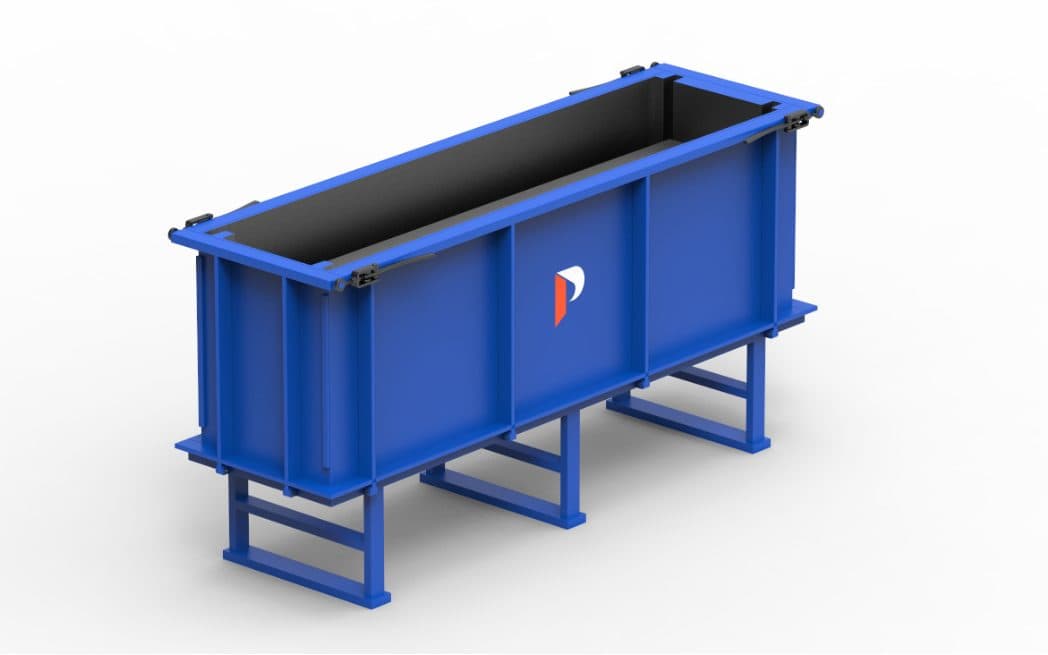
Interlocking trench mould, side panels closed and cavity open, on its stand frameVerified listing1 / 7

Specification

Sizes
Any — built to your section
Unit length
1.2 m – 3.0 m per pour
End profile
Interlocking male / female
Side release
Hydraulic, both panels
Skin plate
10–12 mm, machined faces
Frame
Welded box section on stands
Vibration
External mounts, 6–10 points
Finish
Shot-blasted, two-pack epoxy

Attached documents

Free to download. No email wall on technical data.
Built to the section you already pour.

A steel trench mould with hydraulic side release and an interlocking male/female end profile. The internal section is made to the drawing a plant supplies rather than picked from a fixed range.
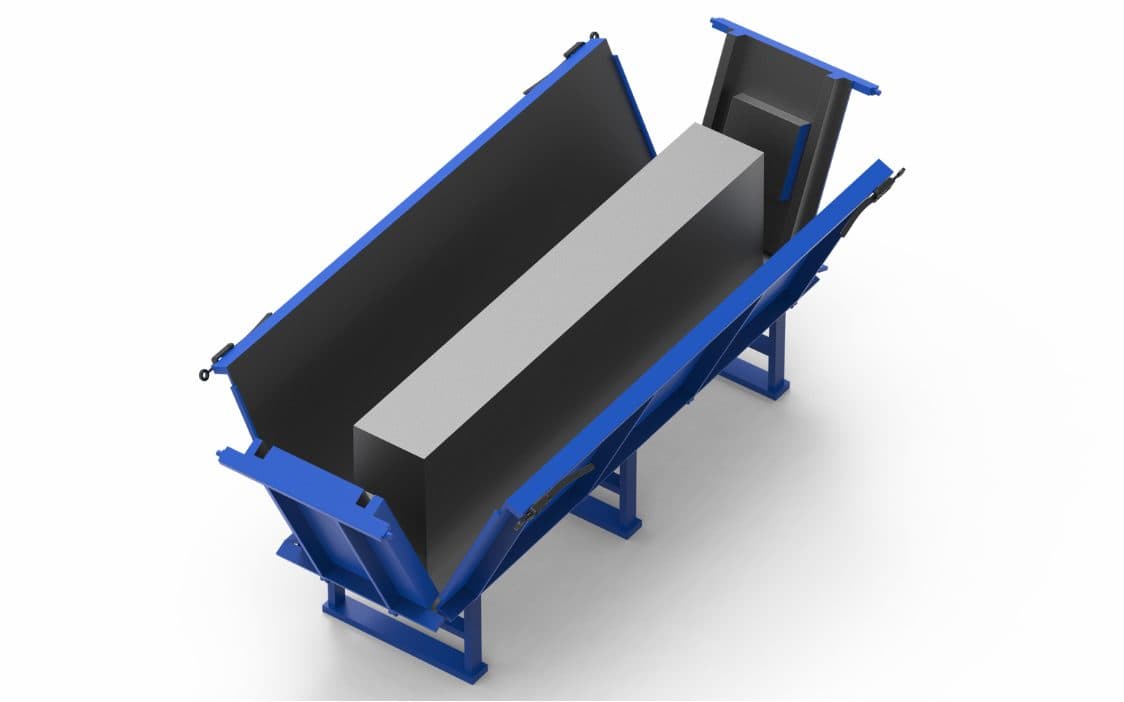
  • Hydraulic side release — Both side panels release hydraulically, so the unit is stripped without wedging or hammering against the skin plate.
  • Interlocking ends — The male/female end profile is machined into the end plates, letting cast sections run together along a trench line.
  • Machined skin plate — 10–12 mm skin plate with machined faces, carried on a welded box-section frame and stands.
  • External vibration — Six to ten external vibrator mounts are set on the frame, positioned against the section being cast.

Releasing the sides

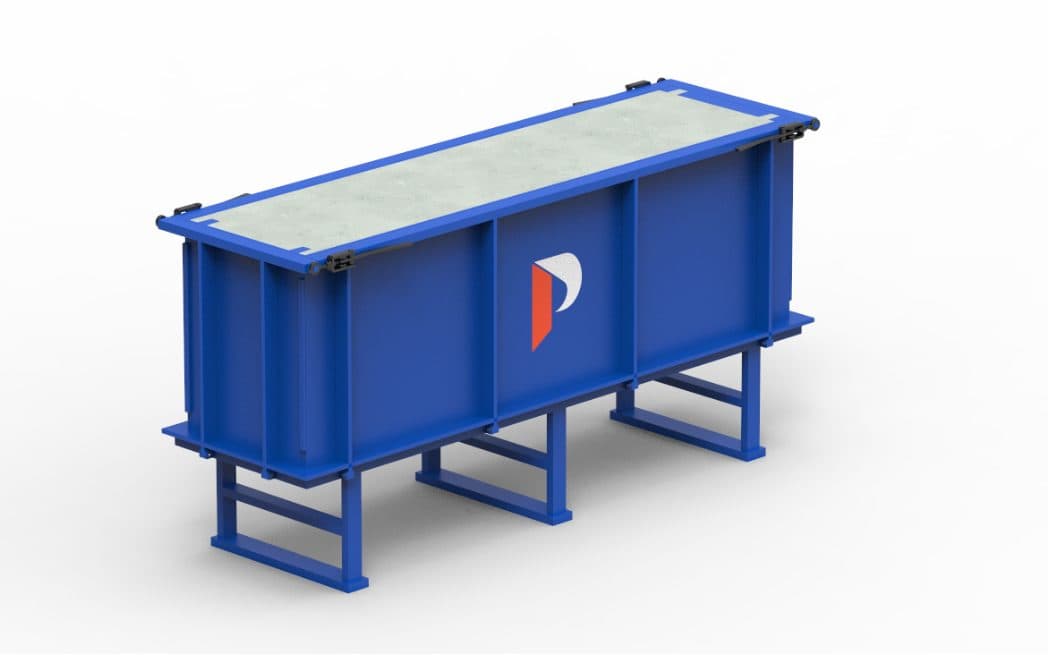
Side panels swing clear on the stand frame once the hydraulics are released, exposing the cast unit on all faces before it is lifted.

Demoulding

The finished section lifts out in one piece with the socket end formed. The unit length is set between 1.2 m and 3.0 m per pour.

In use

Where the mould is run and what it is usually casting on a plant floor.
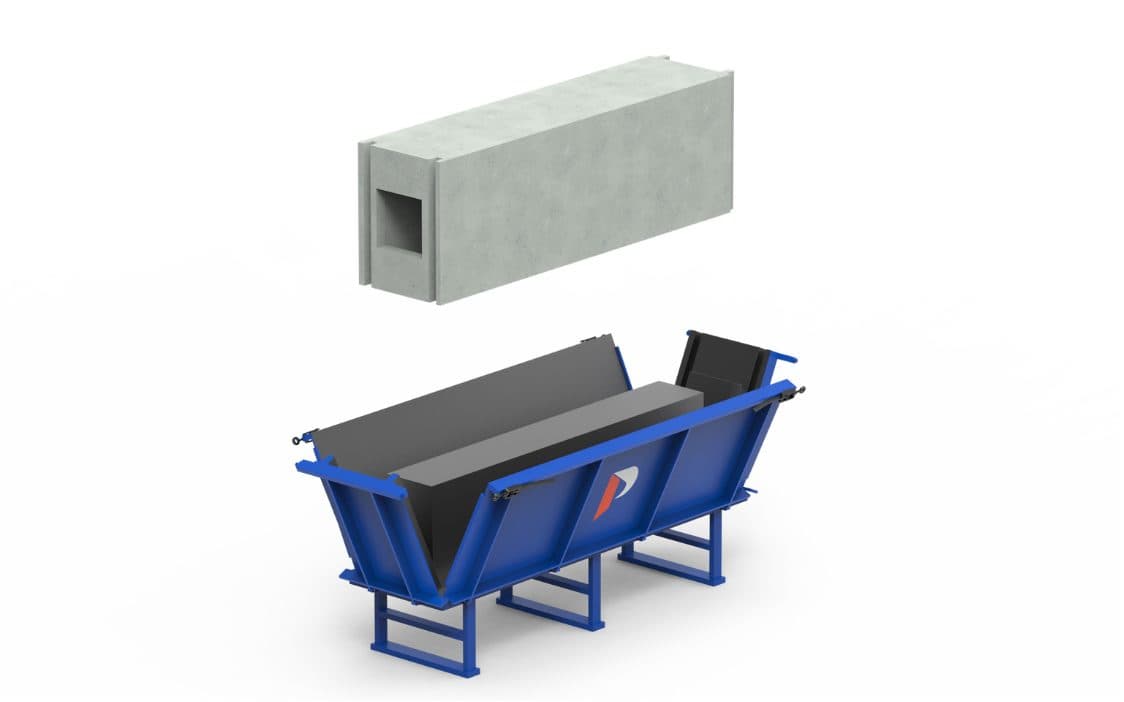
Utility trench runs

Casting interlocking sections for cable and duct trenches, where the end profile has to align unit to unit.
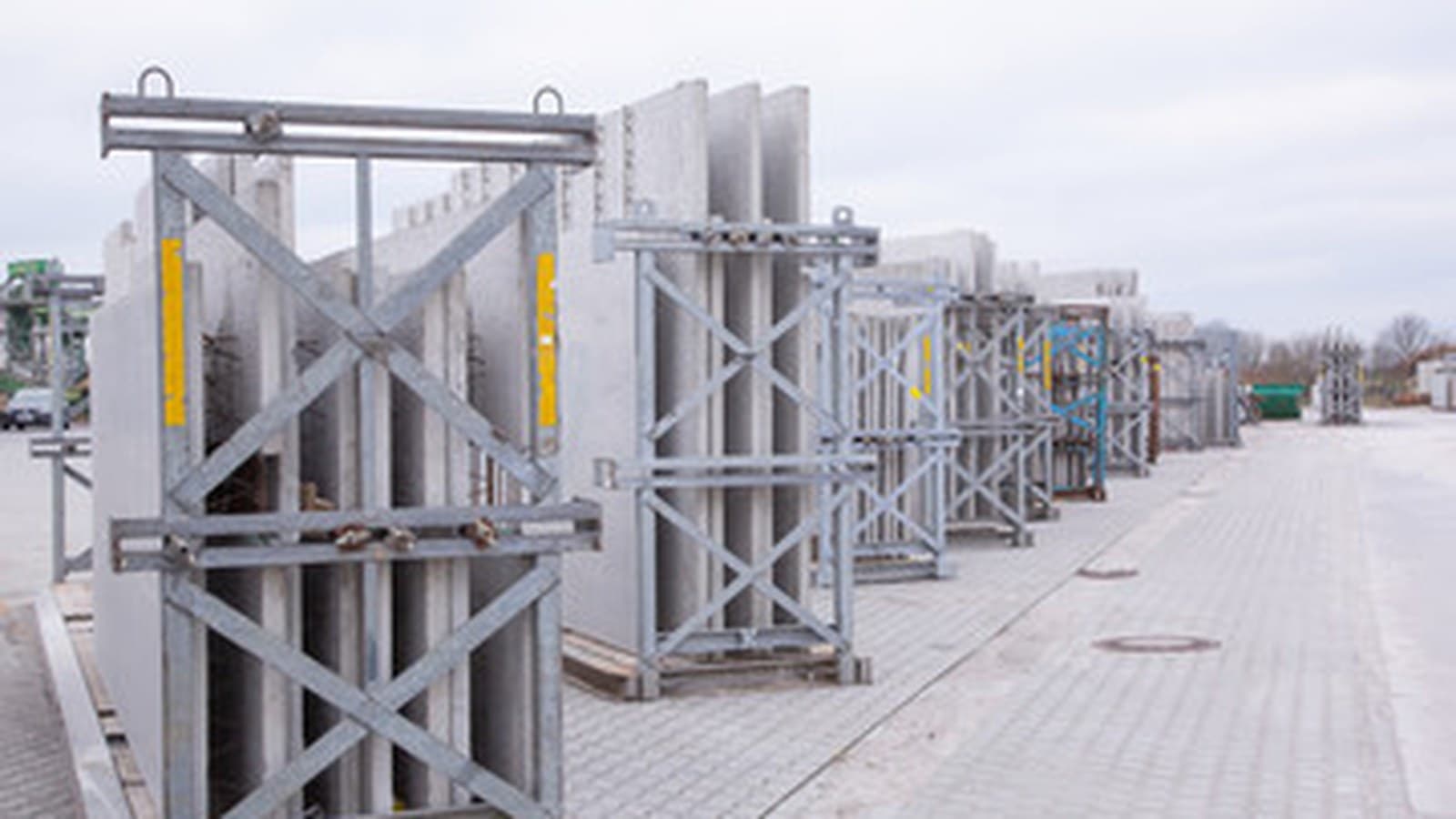
Plant floor production

Run on stands in a covered bay, with external vibration and a fixed pour position.

End cap variants

The same frame takes an end cap configuration for closed-end units at the end of a run.

FAQs

Yes. The mould is built to the section a plant specifies rather than supplied in fixed sizes, and the general arrangement drawing is issued for approval before fabrication.

Between 1.2 m and 3.0 m per pour. The length is fixed by the end plate positions set at build.

Hydraulically, on both panels. The panels swing clear on the stand frame so the cast unit can be lifted without striking the skin plate.

The faces are machined, and the mould is shot-blasted and coated with two-pack epoxy. Finish quality depends on mix and release agent as much as the plate.

Six to ten weeks, running from approval of the general arrangement drawing.